What I did
- Problem framing from lived experience: years of fighting productivity tools — paywalls (Asana), clutter (Trello), lifeless spreadsheets (Google Sheets), and organisational overhead (Notion, Miro) where maintaining the board replaced doing the work.
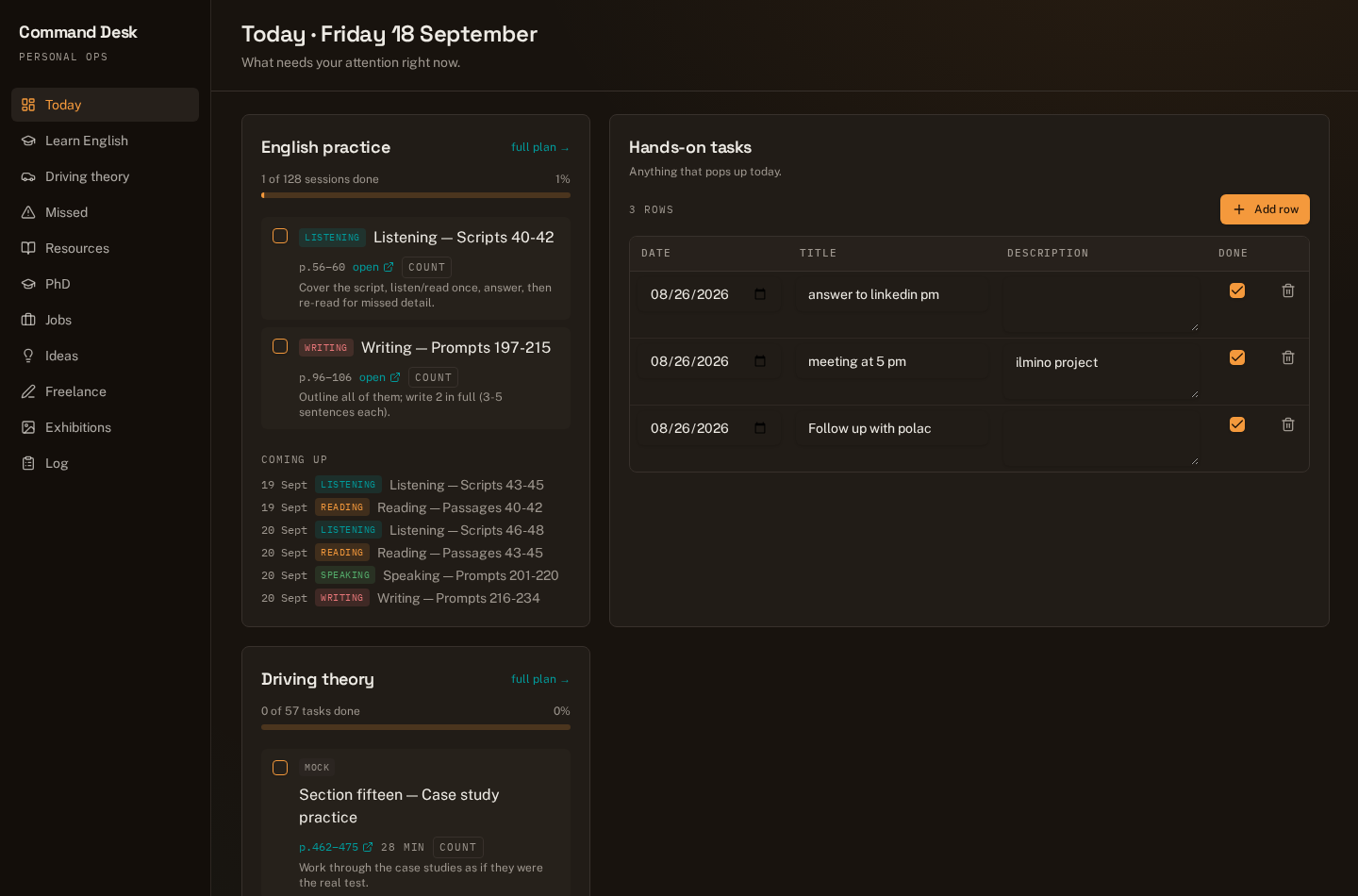
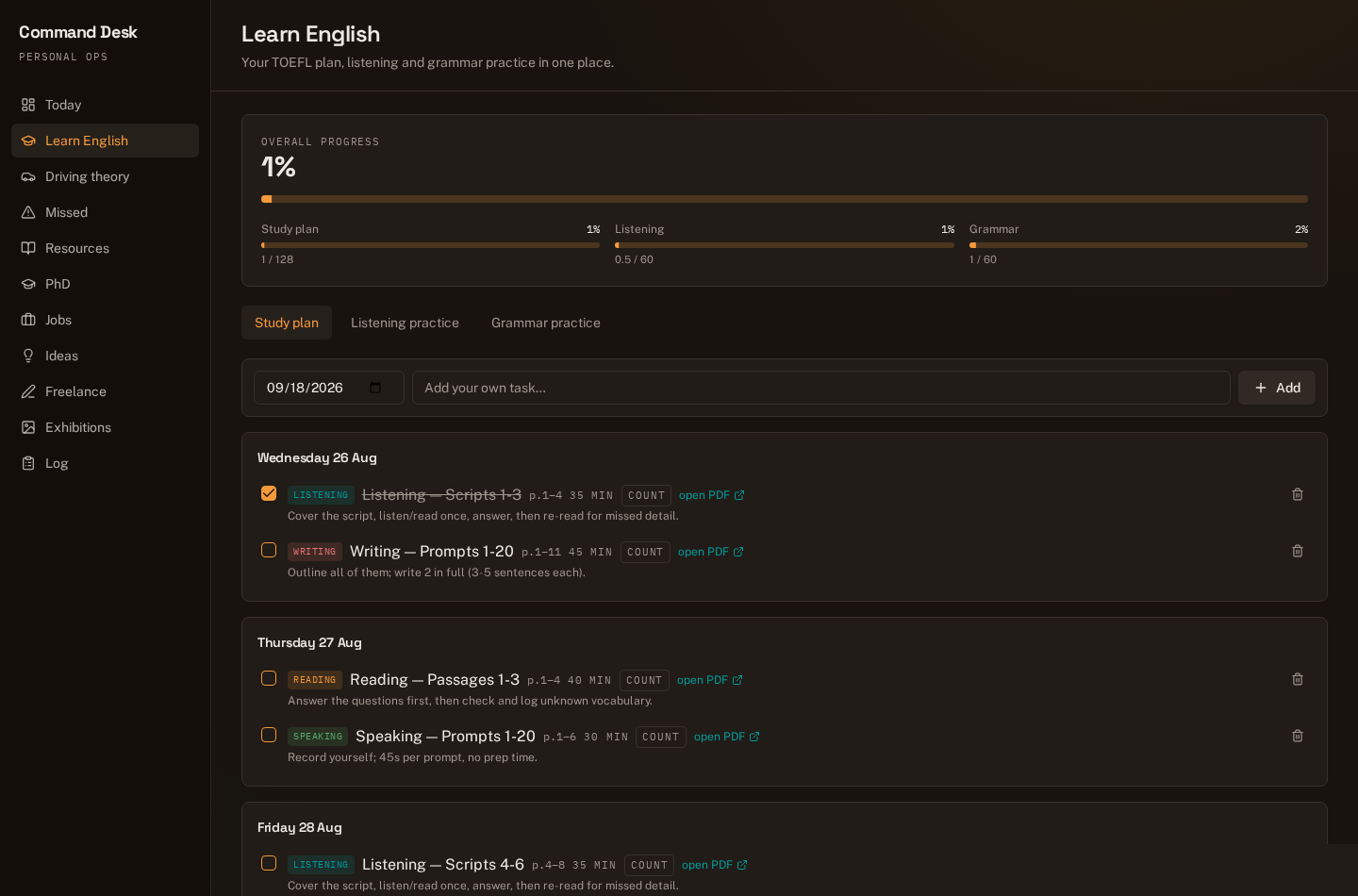
- Personal data as the spec: instead of squeezing my workflow into a generic SaaS template, I used my real Google Sheets data — TOEFL prep, driving theory, daily tasks — as the requirements for a customised dashboard.
- Vibe coding as a method: built the entire tool with Lovable in a few hours, no manual coding — a deliberate experiment in where AI-assisted building genuinely changes the game (personal micro-apps) versus where it doesn't (complex software).
- Researcher's lens on self-design: treating my own daily routine as a research subject — identifying a specific, recurring friction and closing the gap between idea and working tool as a 0-to-1 exercise.
Inside the product
home.png
learn.png
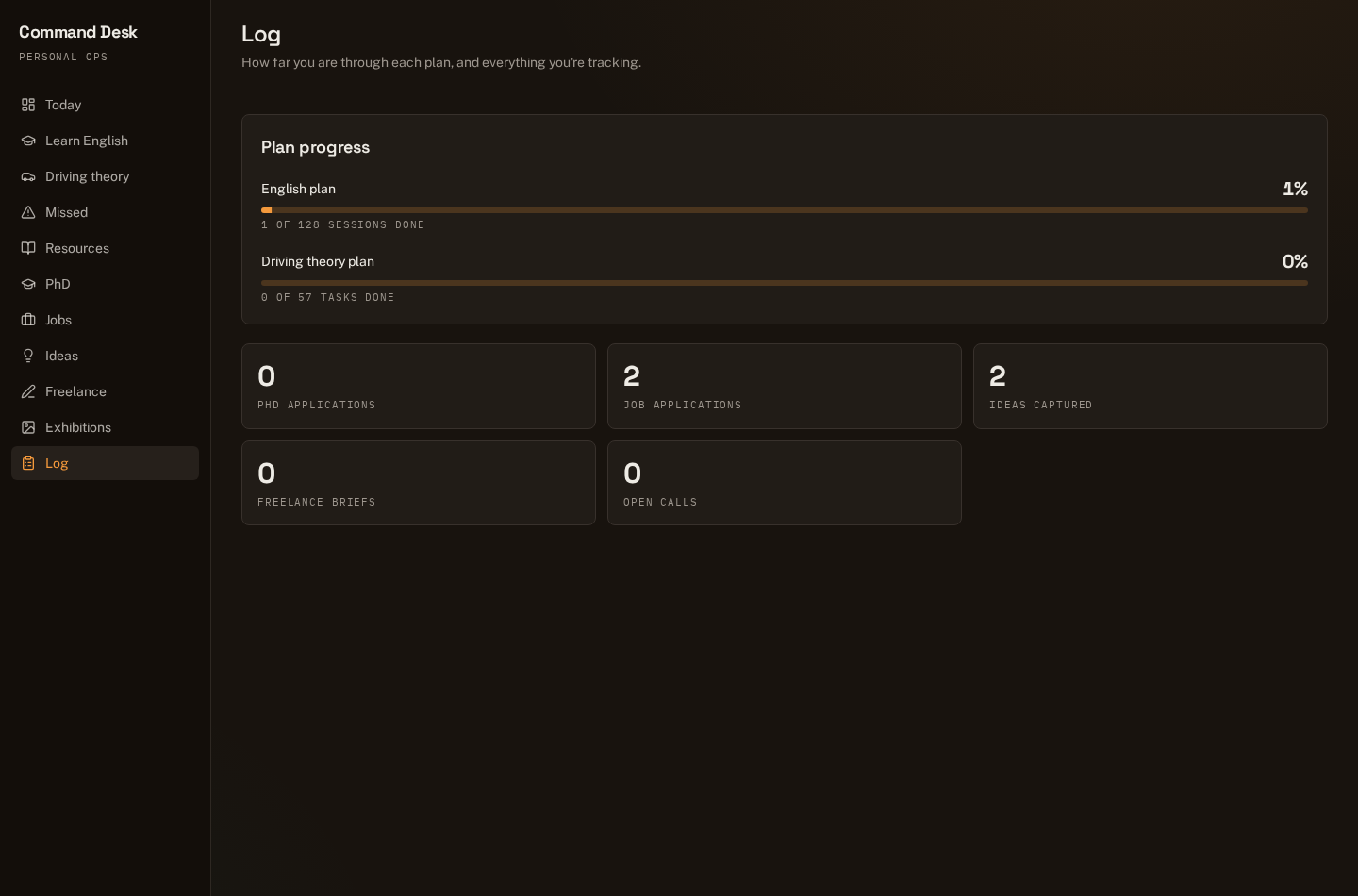
log.png
project-note.txt
This page is deliberately short-form — quick to read, linked to the real thing. When a piece of work deserves full context, challenge, findings and reflection, it lives in the case studies instead.