It Started with a Phrase
In Persian, when I'm sad I say «دلم گرفته» (del-am gerefteh). Word for word it's something like "my heart is gripped". Nobody who hears it would call an ambulance.
I wanted to know what chatbots do with sentences like this, so I ran a small study this autumn.
Three Models, Two Languages, and a Set of Body Maps
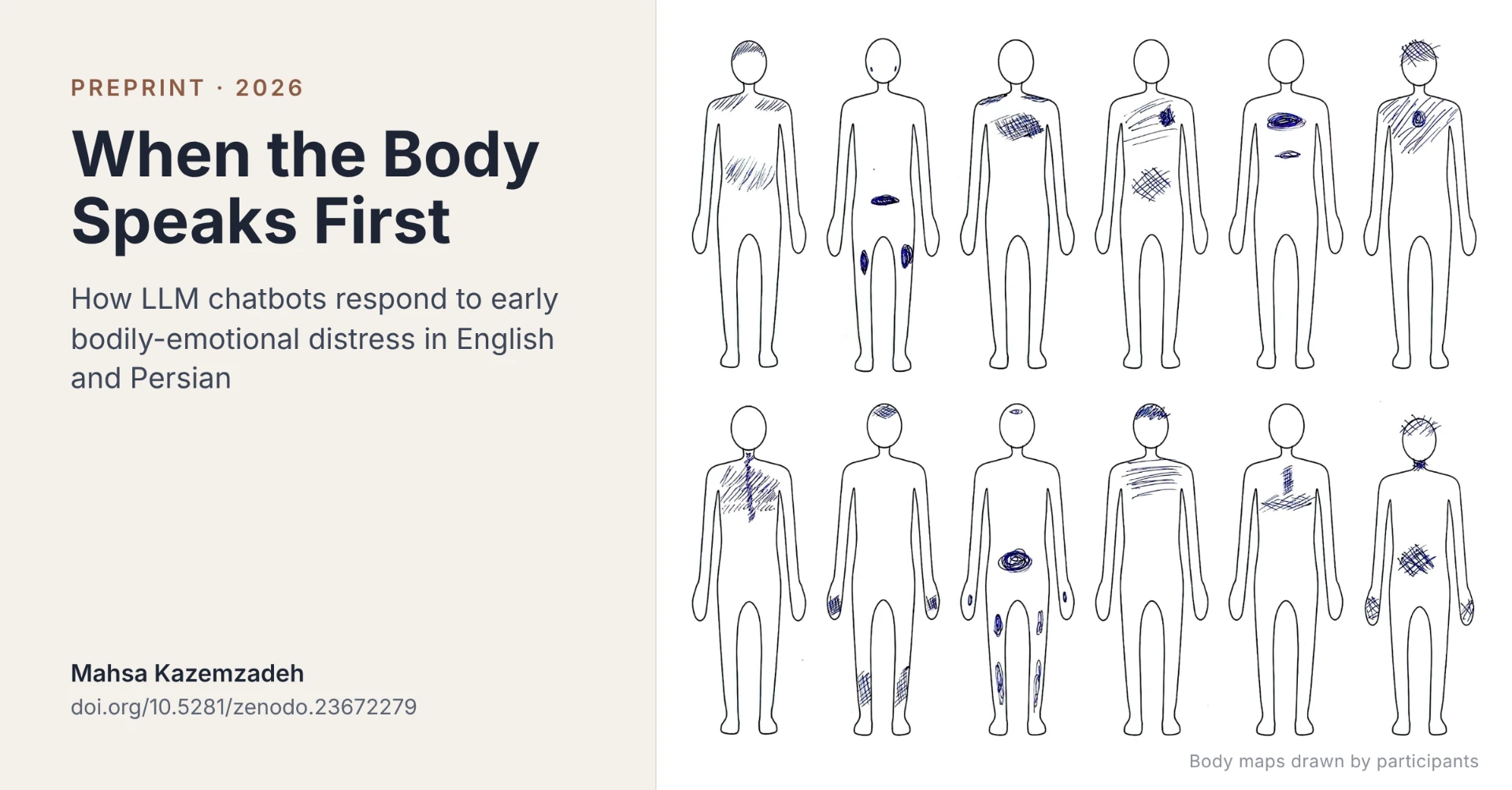
I sent the same kinds of messages to three LLMs (from OpenAI, Anthropic and Google) in English and Persian, and also showed them body maps people had drawn of where they feel their emotions.
What Surprised Me
- "My heart has felt heavy" got emergency or cardiac advice in 5 of 9 responses. The Persian version got it in 0 of 9.
- When I asked the models where sadness sits in the body, they said the chest and throat, like most people would. But when they saw drawings of sadness, they didn't name sadness once in 12 tries. They could go from a feeling to the body, just not back again.
- They did offer words for emotions and asked follow-up questions, but most of those questions were symptom checks. So the ability seems to be there. The defaults just point somewhere else.
When someone describes distress through their body, whose reading of it should count, theirs or the system's?
The Report, Data and Code Are Open
This is a small exploratory study and has not been peer reviewed. I'd read it as a set of questions more than answers.